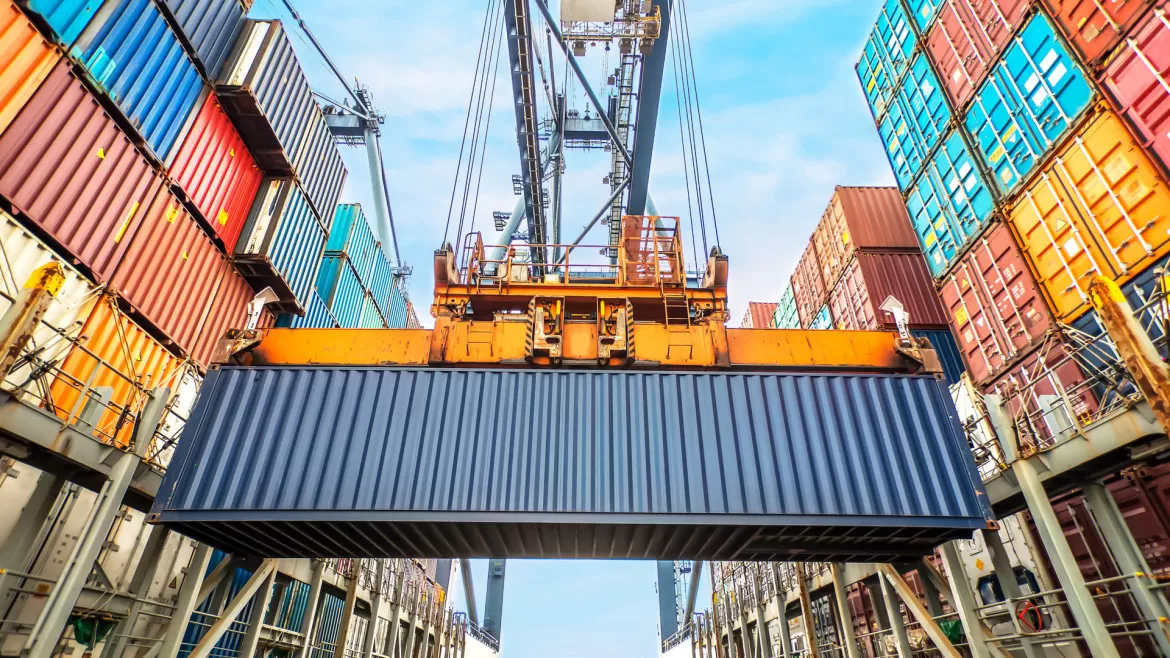
Nigeria’s economy depends heavily on trade. From food imports to machinery and vehicles, a large portion of what keeps businesses running passes through the country’s ports.
For years, Lagos has carried most of this burden.
Lagos currently serves as Nigeria’s primary maritime gateway, with the Apapa and Tin Can Island ports handling the bulk of the nation’s cargo. On the surface, further intensifying this concentration via the new Lekki Deep Sea Port and the proposed Badagry Port suggests a strategy of efficiency—centralizing operations in a single hub to streamline logistics and administrative oversight.

But over time, that model has created serious problems.
Now, even with the recent £746 million UK-backed investment to refurbish Apapa and Tin Can ports, a deeper issue remains: Nigeria is relying too heavily on Lagos.
And that dependence is costing the country more than it appears.
Lagos Has Become a Bottleneck, Not Just a Hub
Anyone familiar with Apapa understands the situation.
What should be a smooth flow of cargo has turned into a daily struggle—long queues of trucks, delayed shipments, and roads that are constantly under pressure.
The problem is not simply that the ports are outdated. It’s that too much cargo is trying to pass through one city.
Even if the ports become faster and more modern, the surrounding infrastructure—roads, logistics systems, and distribution networks—still has to handle the same overwhelming volume.
So while the UK-funded upgrade may improve operations inside the ports, the congestion outside them is likely to remain.
The Real Cost Goes Beyond Delays
When people talk about port congestion, they often focus on time. But the bigger issue is cost.
Every delay at the port translates into money:
- Importers pay extra storage fees
- Businesses incur demurrage charges
- Transport costs increase due to longer turnaround times
These costs don’t stay with the businesses—they are passed on to everyday Nigerians.
That’s why something as simple as port congestion in Lagos can affect the price of food, building materials, and consumer goods across the country.
A System That Depends on One City Is Always at Risk
Relying so heavily on Lagos creates a fragile system.
If anything disrupts port operations—even briefly—the effects ripple across the entire economy.
It could be:
- Flooding in Lagos
- Road damage
- Policy delays
- Industrial action
Because so much trade flows through one location, even a small issue can quickly become a national problem.
The £746M upgrade improves infrastructure, but it doesn’t change this fundamental risk.
While Lagos Expands, Other Regions Stand Still
One of the less obvious consequences of this concentration is what happens elsewhere in the country.
Nigeria has other coastal regions capable of supporting port activities. But because Lagos dominates, these areas remain underdeveloped.
That means:
- Fewer jobs outside Lagos
- Slower regional economic growth
- Missed opportunities for industrial expansion
Over time, this imbalance pushes more people and businesses toward Lagos, increasing pressure on the city even further.
The Hidden Link Between Ports and Inflation
It may not be obvious at first, but port congestion plays a role in rising prices.
When it becomes expensive to import goods:
- Businesses raise prices
- Supply chains slow down
- Scarcity can occur
This affects everything from agricultural inputs to electronics.
So while inflation is often blamed on broader economic factors, inefficient logistics—especially at ports—are part of the story.
More Investment in Lagos Doesn’t Solve Everything
The UK-backed £746 million investment is a major step forward.
It will likely:
- Improve cargo handling
- Reduce turnaround time
- Modernize outdated infrastructure
But there’s a key question that needs to be asked:
What happens when improved ports attract even more cargo into Lagos?
Without a broader strategy, better infrastructure could actually increase pressure on the city rather than relieve it.
The Environmental and Human Cost Is Rising
Beyond economics, there is also a human and environmental cost.
Heavy truck traffic and port activity contribute to:
- Air pollution
- Noise
- Road damage
- Reduced quality of life in surrounding areas
For residents and businesses in Lagos, these are everyday realities.
Concentrating all port activity in one location intensifies these problems instead of spreading them out.
Nigeria Is Missing a Bigger Opportunity
Globally, countries that handle trade efficiently don’t rely on a single port.
They build networks:
- Multiple ports serving different regions
- Strong connections between ports and inland cities
- Balanced distribution of cargo
This approach not only reduces congestion but also spreads economic benefits.
Nigeria, however, is still largely operating a single-hub system.
That limits growth.
The Way Forward Is Clear—But Requires a Shift in Thinking
If Nigeria wants to fix this problem long-term, the solution is not just better ports in Lagos.
It’s a better system overall.
That includes:
- Developing ports in other regions
- Improving rail and road connections nationwide
- Encouraging businesses to use alternative entry points
- Reducing the pressure on Lagos
In other words, the goal should not be to make Lagos handle more—it should be to make Nigeria handle more.
The refurbishment of Apapa and Tin Can ports is a positive development. It shows that investment is being made where it’s needed.
But it also highlights a bigger issue.
Nigeria’s challenge is not just outdated infrastructure—it is overdependence on a single location.
Until that changes, congestion, high costs, and inefficiencies will continue, no matter how modern Lagos ports become.
Because in the end:
A stronger Lagos port system helps—but a balanced national system transforms the economy.