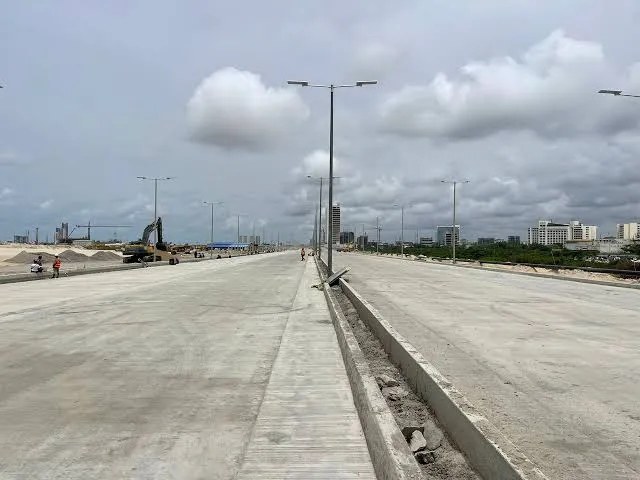
The Lagos–Calabar Coastal Road is one of the most ambitious infrastructure projects in Nigeria’s recent history. Stretching more than 700 kilometres from Lagos through major coastal states to Cross River, the project promises to alter travel, commerce, real estate, logistics, tourism, and national competitiveness. But like every large-scale public infrastructure intervention, its impact is not uniform. Some sectors, communities, and businesses stand to benefit significantly, while others may face economic displacement or short-term losses.
Below is a comprehensive breakdown of the economic implications of the Lagos–Calabar road project, identifying who the winners are, where the losses may occur, and how Nigeria’s broader economy could evolve once the road is completed.
1. Macro-Economic Significance of the Lagos–Calabar Road
The road directly links nine coastal states: Lagos, Ogun, Ondo, Delta, Bayelsa, Rivers, Akwa Ibom, and Cross River. These states collectively account for a substantial share of Nigeria’s GDP and host the country’s largest ports, industrial clusters, tourist attractions, and commercial corridors.
Key macro-economic benefits include:
- Reduced travel time: Journeys that previously took 10–15 hours by broken routes could reduce to 5–7 hours.
- Improved trade facilitation between Western and Eastern Nigeria.
- Strengthened coastal security through easier troop mobility and surveillance.
- Boost to non-oil GDP through tourism, logistics, manufacturing, and real estate.
- Creation of a new economic axis comparable to coastal highways in the U.S. and Brazil.
However, these benefits come with costs—environmental, financial, and social—which shape the winners and losers in this evolving landscape.
2. The Major Economic Winners
2.1. Logistics and Transport Companies
Perhaps the biggest immediate winners are logistics, haulage, and transport companies.
Why they benefit:
- Faster movement of goods between the South-West and South-South reduces fuel costs.
- Better road conditions extend truck lifespan.
- The route opens more distribution hubs and warehouses along the corridor.
- Export-oriented businesses get shorter access routes to ports in Lagos and Calabar.
Companies such as courier firms, e-commerce platforms, FMCG distributors, oil servicing companies, and inter-state passenger transport operators will all enjoy improved operating efficiency.
2.2. Real Estate Developers and Landowners
New infrastructure almost always triggers a real estate boom, and the Lagos–Calabar road is no exception.
Expected outcomes:
- Land prices along the corridor will increase significantly.
- Developers will target new housing estates, logistics parks, and mixed-use projects.
- Large undeveloped coastal areas will become commercially viable.
- Tourism-aligned properties (resorts, beachfront hotels, entertainment villages) will experience rapid growth.
Already, parts of Lagos such as Elegushi, Oniru, Ibeju-Lekki, and Ogombo are seeing speculative interest as the road alignment opens new development frontiers.
2.3. Tourism and Hospitality Sector
The coastal road links several of Nigeria’s most scenic beachfronts and riverside communities.
Benefits include:
- Faster access to beaches, islands, cultural sites, and resorts.
- Growth of new tourist destinations along the coastline.
- Increased private investment in hotels, restaurants, beach clubs, and entertainment hubs.
- Boost for domestic tourism, especially short-stay weekend travel.
A connected coastal corridor will make Nigeria’s southern region a more coherent tourism market—something West Africa currently lacks.
2.4. Manufacturers and Industrial Clusters
Manufacturers in Lagos, Ogun, and the oil-producing states will benefit from:
- Easier transportation of raw materials.
- More efficient links to export processing zones.
- Lower supply chain disruptions caused by poor roads.
- Better access to labour markets across the coastal states.
Industrial areas like Lekki Free Trade Zone, Agbara, Port Harcourt Industrial Zones, and Calabar Free Trade Zone stand to gain significantly.
2.5. Coastal States’ Governments
State governments along the corridor will see:
- Increased internally generated revenue (IGR).
- More investments in housing, hospitality, ports, and industrial zones.
- Growth in land value for government-owned areas.
- Increased job creation and economic diversification.
Even local governments will get higher commercial activity and property taxes.
2.6. Construction Firms and Allied Industries
The immediate beneficiaries are construction companies, cement producers, iron and steel manufacturers, surveyors, engineers, and contractors.
Billions of naira in construction materials will be required over multiple years, generating massive economic activity.
3. The Economic Losers
Despite its benefits, the Lagos–Calabar road also creates economic displacement.
3.1. Businesses and Properties Affected by Demolition
In parts of Lagos—especially Oniru, Elegushi, and Lekki Phase I—businesses, restaurants, hotels, and residential estates have faced or may face demolition.
Economic cost:
- Loss of revenue and customer base.
- High relocation costs.
- Reduction in property value for structures earmarked for removal.
- Job losses among staff of affected businesses.
This is the most visible economic disruption so far.
3.2. Coastal Communities Facing Environmental Risk
Some fishing communities or waterfront settlements could face:
- Loss of access to fishing routes.
- Decline in fish population due to construction.
- Temporary or permanent displacement.
- Loss of informal economic activities.
If mitigation measures are not strong, the project may worsen the livelihoods of already vulnerable coastal groups.
3.3. Competing Transport Routes (Air and Water Transport)
Over time, the improved road could reduce demand for:
- Domestic flights between Lagos and Port Harcourt/Calabar.
- Water transport along the coastal axis.
This doesn’t eliminate these sectors, but road travel may become cheaper and more convenient for many consumers.
3.4. Some Informal Transport Operators
Certain categories of transporters may struggle:
- Small commercial bus operators.
- Motorcyclists who depend on bad roads to maintain dominance.
- Local ferries that connect short coastal distances.
Once the road improves, passengers may opt for faster and more comfortable alternatives.
3.5. Parts of the Environment and Wildlife Zones
The project has raised concerns about:
- Potential damage to coastal vegetation.
- Disturbance to wildlife in sensitive areas.
- Erosion and coastline destabilization if not properly engineered.
Environmental impacts could translate into long-term economic costs for future generations.
4. Neutral or Mixed Outcomes
4.1. Oil and Gas Sector
The coastal corridor passes through Nigeria’s oil-producing region. The project brings:
Positive:
- Improved access to pipelines, refineries, and export terminals.
- Lower risk of supply disruptions.
Negative:
- Construction may temporarily disrupt some pipelines or oil infrastructure zones.
- Illegal refinery sites and bunkering routes may be affected, creating conflicts.
Overall, the sector benefits more than it loses.
4.2. National Government Finances
The federal government bears the financial burden, and outcomes depend on long-term revenue.
Benefits:
- Higher tax income from new businesses.
- Boost to GDP and economic productivity.
Costs:
- Loan servicing and budgetary strain if financing is debt-driven.
- Delays could increase total project cost through inflation.
Whether it is a net positive or negative depends on execution.
5. Long-Term Economic Transformation
If completed and maintained effectively, the road could trigger major structural changes:
5.1. Creation of a “Coastal Economic Belt”
Similar to the Eastern Seaboard in the U.S., Nigeria could develop a continuous belt of:
- Industrial hubs
- Logistic parks
- Entertainment and tourism zones
- Coastal towns converting to urban centres
This would reduce pressure on Lagos by dispersing economic activity along the coastline.
5.2. Boost to Intra-African Trade (AfCFTA)
The road positions Nigeria strategically for continental trade:
- Easier access to Cameroon via Calabar.
- Seamless movement of goods to ECOWAS coastal markets.
- Attraction of foreign investors seeking efficient transport corridors.
5.3. Reduction of Regional Inequality
States like Bayelsa and Cross River, which lag behind Lagos in infrastructure, could experience accelerated development. With increased tourism, commerce, and migration, their economies may become more balanced relative to the South-West.
6. A Project of Winners and Losers—But Net Positive for Nigeria
Every transformative infrastructure project creates disruption. The Lagos–Calabar Coastal Road is no different. While coastal communities, small transport operators, and some Lagos businesses face short-term losses, the broader economic benefits—improved logistics, tourism expansion, real estate development, job creation, and enhanced national competitiveness—are substantial.
If the government manages compensations fairly, protects the environment, and executes the project transparently, Nigeria stands to gain far more than it loses.
The Lagos–Calabar Road is ultimately more than a transport link—it is a nation-shaping economic corridor capable of influencing Nigeria’s growth trajectory for decades.